SNAP-8
SNAP-8 research peptide. Third-party Certificates of Analysis are published for tested products and batches. Fast UK dispatch. For laboratory research use only.
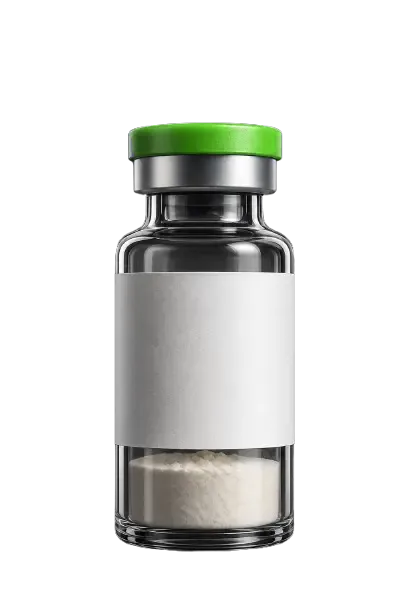
SNAP-8 research peptide. Third-party Certificates of Analysis are published for tested products and batches. Fast UK dispatch. For laboratory research use only.
Available sizes: 10 mg
SNAP-8 (Acetyl Octapeptide-3) is a synthetic peptide studied in topical research examining how facial muscle signalling influences visible skin movement and expression lines. It was developed as an extended version of Acetyl Hexapeptide-8 (Argireline), a peptide widely referenced in cosmetic peptide research.
Researchers study SNAP-8 because it interacts with signalling pathways involved in the release of neurotransmitters that control muscle contraction. By examining how these signals are regulated, laboratory models can explore the relationship between facial muscle activity and dynamic skin movement.
SNAP-8 achieves this interaction through the SNARE protein complex, a cellular system responsible for controlling neurotransmitter release at nerve terminals.
Neuromuscular Signalling Research: SNAP-8 is examined for how it influences communication between nerves and muscle fibres.
Expression Line Models: Researchers study the connection between repeated facial muscle movement and visible skin creasing.
SNARE Complex Interaction: The peptide interacts with the SNAP-25 protein involved in neurotransmitter release.
Second-Generation Design: SNAP-8 was developed by extending the peptide chain of earlier hexapeptide analogues to improve protein interaction efficiency.
The SNARE complex regulates how nerve cells release neurotransmitters such as acetylcholine. These signalling molecules control communication between nerves and muscles, including those responsible for facial movement.
Peptides that interact with this system provide useful models for studying neuromuscular signalling, peptide–protein interactions, and topical peptide activity within laboratory settings.
Neuromuscular signalling research
SNARE protein interaction studies
Peptide–protein binding models
Topical peptide signalling research
SNAP-8 is frequently discussed in topical peptide research examining skin signalling and peptide interaction with dermal structures.
Researchers exploring skin-related peptide signalling pathways may also investigate peptides involved in dermal regeneration and collagen research such as GHK-Cu, which is widely studied in extracellular matrix and skin repair models.
Certificates of Analysis are published for tested products and batches. A certificate is a batch-specific record: it reports what was measured, by which method, on a stated date, against a batch identifier. It is evidence about the sample analysed at the time of analysis, and it is silent on attributes it does not list and on what has happened to the material since.
The batch number is the field that connects the document to a physical vial. Where the identifier on a vial does not appear on a certificate, the certificate does not describe that vial, however thorough the analysis behind it was. Batch records can be searched directly, and the guides below explain what each field establishes and what it does not.
Supplied for laboratory research use only. Not for human or veterinary use.